What temperature should LTO tapes be stored at?
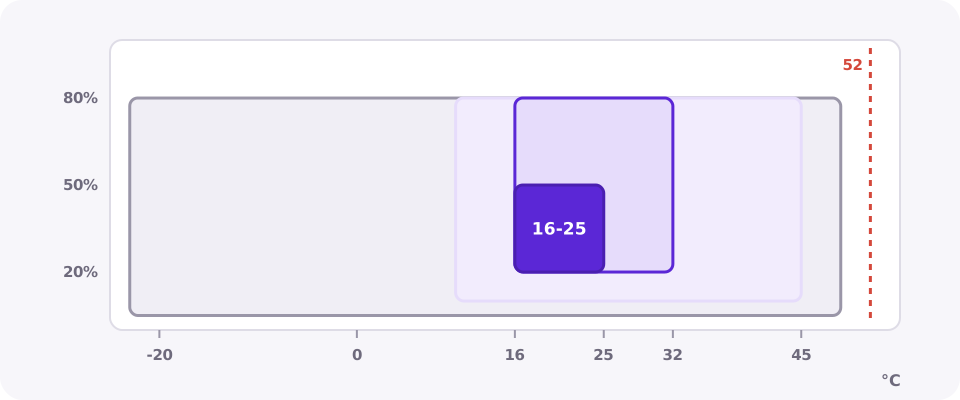
16 to 25 °C (61 to 77 °F) for long-term storage, according to IBM and Fujifilm. For a shorter time, IBM allows 16 to 32 °C, and the tape itself must never go above 52 °C.
Storage guide
Store LTO tapes at 16 to 25 °C (61 to 77 °F) and 20 to 50% relative humidity for the long term, standing upright in their cases, away from magnets and sunlight; give them 24 hours in the drive room before use, and keep a second copy at another site.
Conditions
| Use | Temperature | Relative humidity | Note |
|---|---|---|---|
| Long-term (archival) storage | 16 to 25 °C (61 to 77 °F) | 20 to 50% | IBM recommended storage; Fujifilm long term |
| Shorter-term storage | 16 to 32 °C (61 to 90 °F) | 20 to 80% | IBM allowable storage; Fujifilm allows up to 35 °C short term |
| In a drive (recommended) | 15 to 25 °C (59 to 77 °F) | 20 to 50% | Fujifilm LTO-9 recommended operating range |
| In a drive (allowed) | 10 to 45 °C (50 to 113 °F) | 10 to 80% | IBM operating range |
| Shipping | −23 to 49 °C (−9 to 120 °F) | 5 to 80% | IBM; the tape itself must not go above 52 °C (Fujifilm) |
Figures from the IBM LTO Ultrium data cartridge data sheet (LTO-9 and LTO-10) and the Fujifilm LTO-9 data sheet. The Overland-Tandberg tape handling guide gives the same archive range. All ranges assume no condensation; IBM sets a maximum wet bulb temperature of 26 °C.
These conditions are what the 30-year archival rating assumes. More on how long tapes last is in LTO tape lifespan.
Cases, cabinets and racks
| Option | Best for | What to check |
|---|---|---|
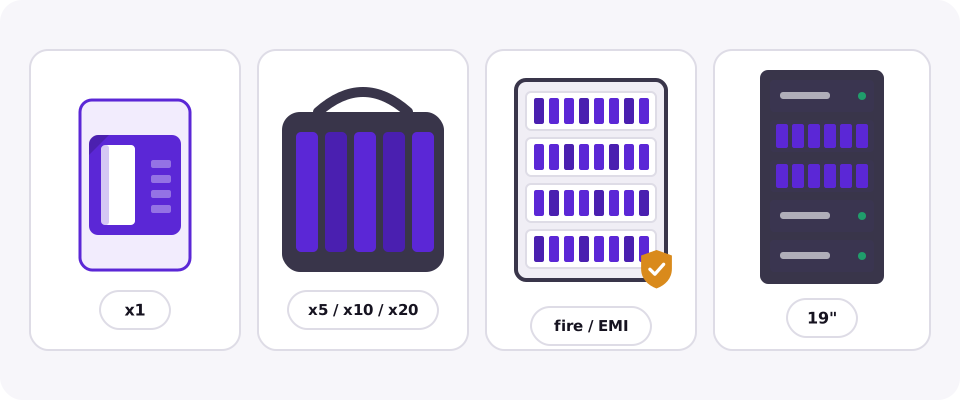
| Jewel case (the case the cartridge ships in) | Every cartridge on a shelf | Store it standing on edge, like a book, not lying flat in a pile |
| Padded transport case (turtle case) for 5, 10 or 20 cartridges | Carrying tapes offsite and back | Foam slots that hold each cartridge, a latch that locks, a place for a seal or tag |
| Storage box or drawer insert | Small archives in an office cupboard | Slots that keep cartridges upright and separated; dust lid |
| Media cabinet | Tens to hundreds of cartridges in one room | Drawers sized for LTO, a lock, and for important archives a fire rating made for magnetic media, which must keep the inside cooler than a paper safe |
| Rack shelf or library | Cartridges next to the drives in a server room | Shelves sized for LTO cartridges in a 19 inch rack; for many cartridges a tape library stores and loads them for you |
A paper fire safe is not enough for tape: it is designed to keep paper below the point where it burns, which is far hotter than tape tolerates. Look for a cabinet or safe rated for magnetic media (in the US, UL 72 Class 150 is the rating for magnetic tape and film, against Class 350 for paper), or rely on a second copy at another site. Barcode labels and cleaning cartridges are covered in cleaning tapes, labels and cases.
Offsite
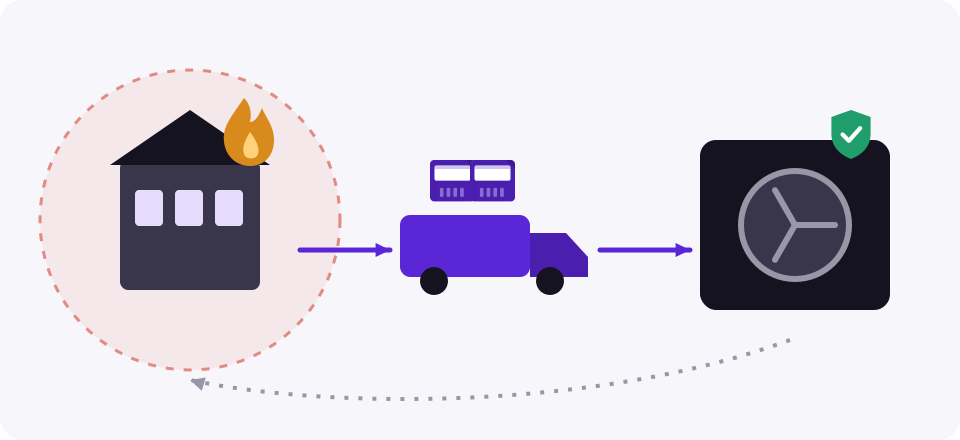
One copy of the data should always be somewhere a fire, flood or break-in at the main site cannot reach. With tape that means taking cartridges out of the building on a schedule:
If you use a vault company, ask where and how they store tapes (temperature and humidity control), how quickly they can return a cartridge, how they record chain of custody, and how they transport cartridges between sites. Why offsite tapes still matter is argued in offsite tape backups still beat most "good enough" plans.
Handling
More guides
Pricebook
Request current LTO media and drive pricing before you budget a migration or a refresh.
16 to 25 °C (61 to 77 °F) for long-term storage, according to IBM and Fujifilm. For a shorter time, IBM allows 16 to 32 °C, and the tape itself must never go above 52 °C.
20 to 50% relative humidity for long-term storage, without condensation. Short-term storage can go up to 80%, but stable and dry is what the 30-year rating assumes.
Upright. Overland-Tandberg says media should be stored vertically, and Dell says to keep tapes in their cases, upright, and never stacked.
24 hours in the room with the drive, or longer if it came from somewhere much colder or more humid, so no condensation forms in the drive.
A safe rated only for paper is not enough, because it lets the inside get far hotter than tape tolerates. Use a safe or cabinet rated for magnetic media (UL 72 Class 150 in the US), or keep a second copy offsite.
In a climate-controlled place with the same conditions as onsite, carried in padded cases, encrypted, and logged so you always know which cartridge is where.