Home LTO setups tend to get dismissed from both directions.
Enterprise people roll their eyes because the environments look improvised. Hobbyists get intimidated because the hardware looks industrial. Both miss the same point: a small-scale tape setup can be completely legitimate if the operator stops pretending legitimacy comes from price alone.
The difference is process, not prestige
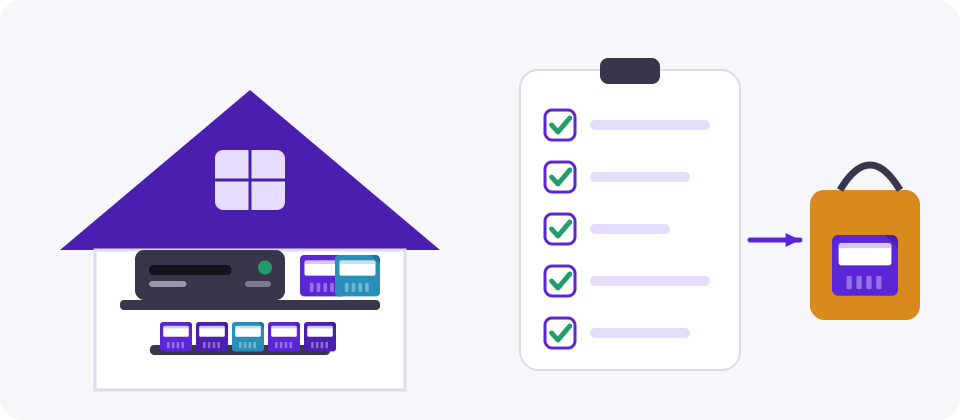
A home lab with tape can still do the important things right. Rotation. Verification. Offsite handling. Cataloging. Restore rehearsal. Media labeling. None of those require an enterprise badge. They require discipline.
That is why so many of the more interesting tape discussions sounded grounded rather than performative. People were not asking how to look like an enterprise. They were asking how to keep important data safe for years, how to build a real offsite copy, how to avoid running everything hot forever, and how to make tape coexist with disk-based backup workflows without turning the whole thing into chaos.
Those are serious questions. The fact that they are being asked in labs and home environments does not make them unserious.
Tape only becomes silly when the workflow stays theatrical
If the setup exists just to say tape exists, then yes, it becomes a prop. The same is true for any backup medium.
But once somebody starts tracking media carefully, documenting restore steps, staging data intelligently, and testing what they wrote, the environment stops being cosplay. It becomes infrastructure sized to its owner.
That is the more useful way to think about home LTO. Not “enterprise versus hobby,” but “theatrical versus operational.”
A small tape setup can be operationally stronger than a much larger disk-only environment full of vague assumptions. That is the uncomfortable part people do not always like admitting.
Why the medium keeps escaping its stereotype
Because tape continues to solve real archive problems even when the operator is not a giant organization.
Photo libraries grow. Video collections grow. NAS snapshots pile up. VM exports accumulate. Offsite planning eventually stops being optional if the data matters enough. At some point, removable cold storage starts looking like common sense rather than eccentricity.
That is where home LTO gets real. Not when the gear arrives, but when the owner stops treating it like a conversation piece and starts treating it like a responsibility.
That shift is what makes the setup legitimate. The hardware just makes it possible.