Loose disks are incredibly good at hiding the moment your backup strategy stopped maturing.
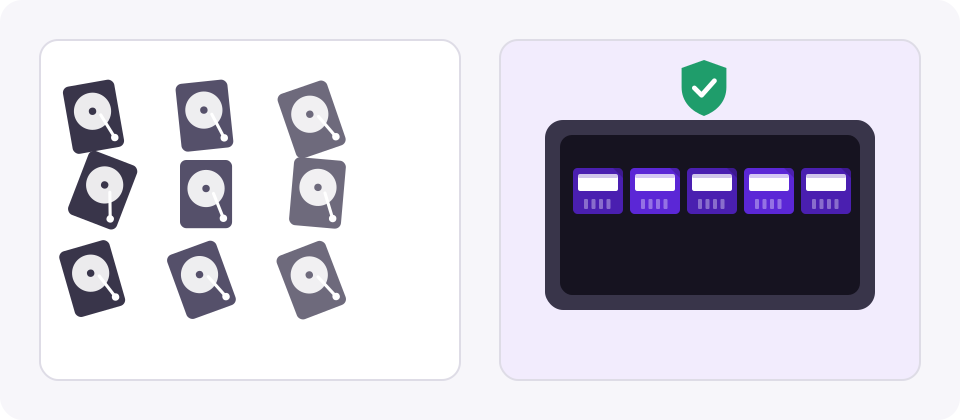
At first, they feel efficient. One more drive. One more shelf. One more copy somewhere nearby. Then the archive grows, the labels get vague, the retrieval story gets worse, and suddenly you are not operating a backup system so much as managing a tolerated pile of media.
That is when tape starts to make emotional sense.
Scale changes what “reasonable” looks like
Small archives can get away with casual habits for longer than people think. A few extra disks, a second copy, maybe some cloud spillover, and it all feels manageable enough. But once the archive moves into real volume, those same habits begin to look flimsy.
Offsite movement becomes awkward. Long-term retention starts consuming expensive online capacity. Cataloging gets sloppier. The difference between “copy exists” and “restore will be calm” gets wider.
In several recent storage discussions, that was the actual turning point. Not some abstract love of tape technology, but the realization that disk-centric improvisation had stopped scaling cleanly. Tape looked appealing because it forced a more intentional archive shape.
Tape is often a symptom of strategic honesty
People think of tape adoption as conservatism or nostalgia. Often it is just realism.
Once an archive gets big enough, somebody has to answer hard questions about retention class, recovery expectations, media handling, and offsite movement. Tape does not create those questions. It just makes them impossible to ignore.
That can be healthy. Suddenly media is labeled deliberately. Rotation becomes explicit. Restore planning gets discussed. Cold data gets treated like cold data instead of pretending it deserves endless premium treatment. The archive becomes structured.
That is not tape magic. That is what happens when a storage medium forces the operator to stop bluffing.
Outgrowing disks does not mean disks stop mattering
It means they stop being the whole story.
Fast recovery still belongs with fast storage. Staging still matters. Local operational backups still matter. But durable archive planning often needs a colder, cheaper, and more removable layer than “another box of disks in the same orbit.”
That is where tape starts looking rational instead of eccentric. Not because it replaces everything, but because it finally gives the archive a tier that matches what the data actually is.
The moment your archive outgrows loose disks is usually the moment backup strategy grows up. Tape is not the only path through that door. It is just one of the clearest signs that you finally admitted the pile had become a system.