The Thrill of Getting In Cheap
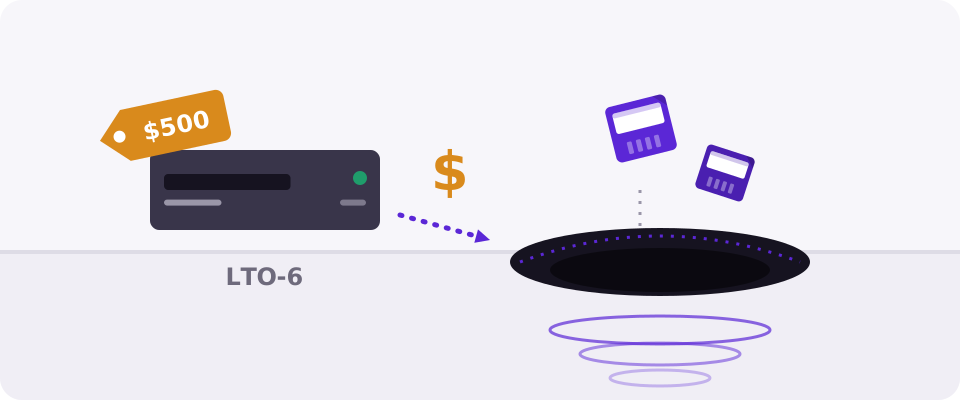
There’s a specific kind of excitement that hits when you think you’ve outsmarted the system. That moment when you see an LTO-6 drive listed for $500—way below what it “should” cost—and convince yourself you’ve just unlocked enterprise-grade storage on a budget. That’s exactly where this story begins: a rejected offer, a quick pivot, and a “why not” purchase that turns curiosity into commitment .
You can feel the optimism. “Hopefully some tapes will come in the next day or so… I can get started.” It’s not just about storage—it’s about entering a new world. One that promises massive capacity, long-term reliability, and a kind of retro-futuristic charm. And honestly, that excitement is contagious.
But beneath that enthusiasm sits a quiet question: is this actually a smart move, or just a really compelling rabbit hole?
“LTO Backup Is Addicting” — And That’s Not a Joke
One of the first reactions cuts straight through the honeymoon phase: “LTO backup is addicting.” It sounds playful, almost like a throwaway line. But it lands harder the more you think about it.
Because it’s true. Once you start, it’s not just about backing up files anymore. It becomes about optimizing tapes, organizing archives, chasing better deals on used media, and slowly building something that feels bigger than your original goal.
Another voice adds a warning right after: “Be careful with used tapes.” That’s the duality of this space. Excitement paired with caution. Growth paired with risk.
Some people lean into it. They treat LTO like a hobby, not just a tool. Others see that same behavior and call it what it is: a slippery slope where “cheap” quickly turns into a long list of hidden costs.
The Minimalists vs The Tinkerers
The most interesting divide shows up in how people approach using these drives. On one side, you’ve got the minimalists. The ones who say: keep it simple, don’t overthink it.
“Use LTFS. Don’t use proprietary formats.” That advice shows up like a rulebook. Keep your data accessible. Avoid anything that locks you in. If you need to compress files, do it for practical reasons—like reducing the pain of handling thousands of small files—but don’t get fancy.
There’s a kind of discipline there. A belief that tape should stay boring.
Then you’ve got the tinkerers. The ones experimenting with tar archives, custom workflows, and different tools depending on their setup. “Works good enough for backup purposes,” one person shrugs, which feels like the unofficial motto of DIY storage.
Neither side is wrong. One prioritizes stability. The other prioritizes flexibility. But both are navigating the same underlying truth: tape isn’t plug-and-play. It demands decisions, and those decisions shape how painful—or smooth—your experience becomes.
The Hidden Rules Nobody Tells You Up Front
Once you get past the initial excitement, a set of unwritten rules starts to emerge. Not from manuals, but from people who’ve already made the mistakes.
“Do not use the clean tape if the drive is not asking for cleaning.” That one sounds oddly specific, because it is. Over-cleaning can do more harm than good. It’s the kind of detail you only learn after something goes wrong.
Then there’s the environmental side: “Protect the drive/tapes from dust and excessive heat.” Again, obvious in theory. But in practice, it’s easy to underestimate how sensitive these systems are. This isn’t a USB drive you toss in a drawer. It’s a piece of hardware that expects a controlled environment.
And then there’s the question nobody wants to think about: what happens if it all fails? One commenter puts it bluntly, wondering if people insure setups that cost more than a car. It’s half joke, half reality check.
Because once you’re in deep enough, the stakes stop feeling hypothetical.
The Cost Illusion Starts to Crack
At first glance, $500 for an LTO-6 drive feels like a steal. And technically, it is. But that number doesn’t exist in isolation.
You need tapes. Maybe new, maybe used—each with its own risks. You need the right interface, cooling, space, and time to manage everything. And if something breaks, you’re back in the same ecosystem where replacements aren’t cheap and repairs aren’t simple.
That’s where opinions start to split harder.
One perspective sees this as a smart long-term play. High capacity, low cost per terabyte, and the satisfaction of owning your storage pipeline. Another sees it as a trap—an entry point that looks affordable but quietly demands more and more investment.
And then there’s a third angle, more neutral but no less honest: it’s worth it if you enjoy the process. Not just the outcome, but the tinkering, the learning, the occasional frustration.
The Emotional Core: It’s Not Really About Storage
What stands out most isn’t the hardware—it’s the feeling behind it.
“I am really excited.” That line says everything. This isn’t just a purchase. It’s curiosity turning into action. It’s the appeal of building something yourself instead of relying on cloud services or off-the-shelf solutions.
That emotional hook is powerful. It’s what pulls people in, keeps them experimenting, and sometimes keeps them spending more than they planned.
But it also creates blind spots. Excitement can make risks feel smaller than they are. It can turn warnings into background noise.
So, Is It Worth It?
There’s no clean answer, and that’s what makes this space so interesting.
Some people will tell you it’s absolutely worth it. That once you understand the quirks, LTO becomes one of the most reliable and cost-effective ways to store massive amounts of data.
Others will tell you to stay far away. That the complexity, cost of entry, and long-term risks outweigh the benefits unless you’re operating at a much larger scale.
And then there’s the middle ground—the people who jumped in, learned a lot, maybe spent more than expected, but don’t regret it. Not because it was perfect, but because it was engaging.
That might be the most honest take of all.